The Hidden Cost of Reactive Hiring.
07 May, 2026



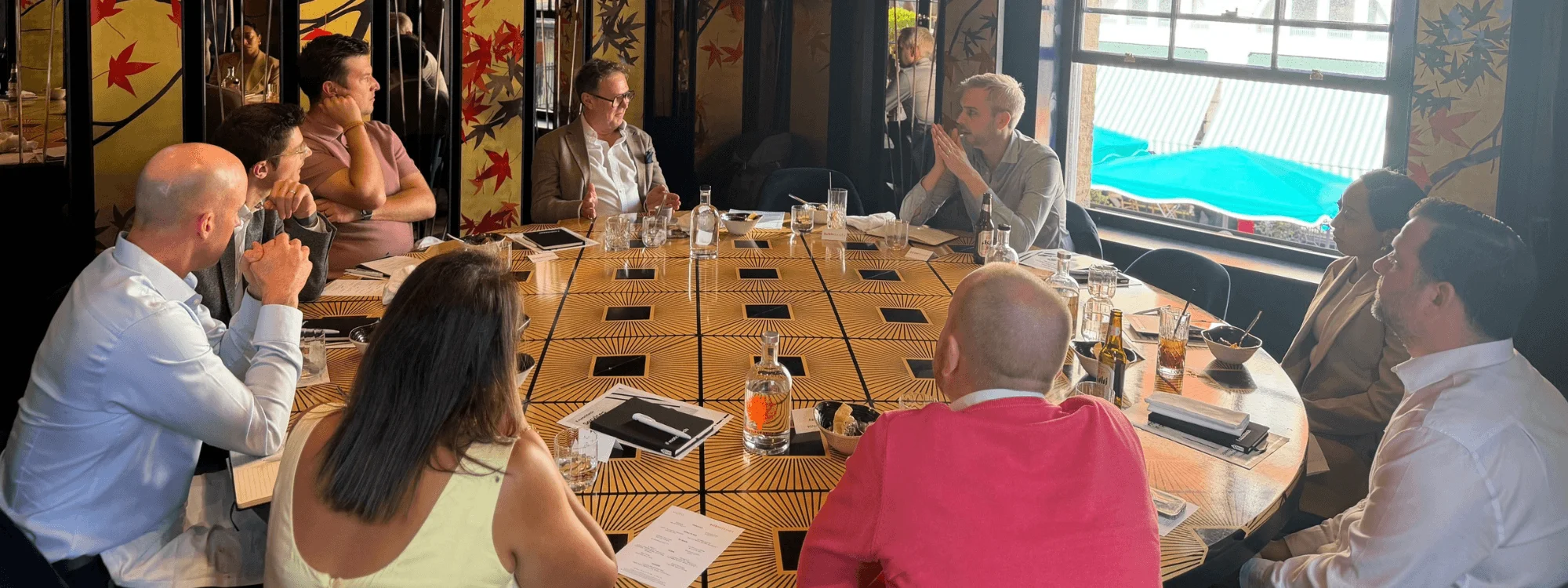
Last month I hosted the latest Matchtech Services Procurement Roundtable over lunch at Sushi Samba in Covent Garden. Tasty food, an easy-going space, and a circle of procurement peers. They’re truly happy to talk openly and honestly.
They share what is and isn't working in services procurement. They also discuss where service procurement outsourcing fits in. That honesty is what makes these sessions worth running.
We built the conversation around two questions:
 The shift in the room
What struck me most was how far the conversation had moved since the last roundtable. Then, much of our time went on the nature of the problem and how far it exists. This time, nobody needed convincing. Within minutes we had moved on to "how do we change things?"
And then we got stuck, on "how do we convince the exec?"
That tells you something. We agree on the diagnosis. The obstacle is now getting services spend onto the leadership agenda with enough weight to secure action.
Why visibility in services procurement is so hardThe first question produced the most energy. Data sits across multiple business units, systems and teams, so nobody has a complete picture.
Responsibility is just as scattered. No one person takes charge, and people rarely see it as a single problem. Statements of work, consultancy, contingent labour, and IR35 often have different owners.
So, we handle each one in isolation.
Someone described it as a spend black hole, and the phrase stuck. If nobody owns the problem, the natural follow-up is "who is going to fix it?" and that question was left hanging in the room.
Compliance came through as a main driver. For many organisations, it is the risk that gets attention, not the value. That is understandable, but it may also be a useful lever. If compliance gets the exec to listen, it may open the door to a wider talk.
That talk can cover visibility and control.
Service procurement outsourcing: service, support or partnership?The second question prompted some healthy challenge on the language itself. Is this truly procurement outsourcing, or is it supporting a need, or partnering?
The label matters because it shapes expectations on both sides. A model sold as delivering a function sets a higher bar than one built to support an internal team. Where procurement outsourcing services fall short, it often comes down to a mismatch. It is not due to the provider’s capability.
AI as a means, not an endAI came up, as it does in every conversation at the moment, but the framing was practical. The useful question is not what AI can do in the abstract. It is how it helps us get things done. For a problem rooted in fragmented data and unclear ownership, that is the right test, and it keeps the focus on outcomes, not tools.
What guests took awayI was pleased to see several attendees share their reflections afterwards. Saffron Demel-Espeute emphasized the importance of data visibility. She also stressed end-to-end ownership of the workforce.
She discussed AI. She highlighted procurement’s role in total services procurement. Gareth Wilson said it is rare to meet other procurement people and talk well about shared problems. He said the space to listen and go deeper made it valuable.
Thank you both, and thank you to everyone who joined. A roundtable is only as good as the people around it, and the openness of this group made it.
What next?The movement between the two roundtables is the real story for me. We went from "how big is this?" to "how do we change it?" in one session. The next step is the harder one.
I would like future talks to move from, "How do we convince the exec?" to, "They are onboard, so what do we do now?" That is where the practical work starts. We agree ownership and build one view of spend. We decide what to run in-house and what to partner on through service procurement outsourcing.
If you want to join that conversation, I would love to hear from you.
This applies if you are weighing procurement outsourcing services.
It also applies if you are building capability in-house. And if you are already at that stage in your own organisation, even better. We should be learning from you.